NEWS
3rd stamp edition 2023
04 September
Princely Treasures
PALACES AND CASTLES
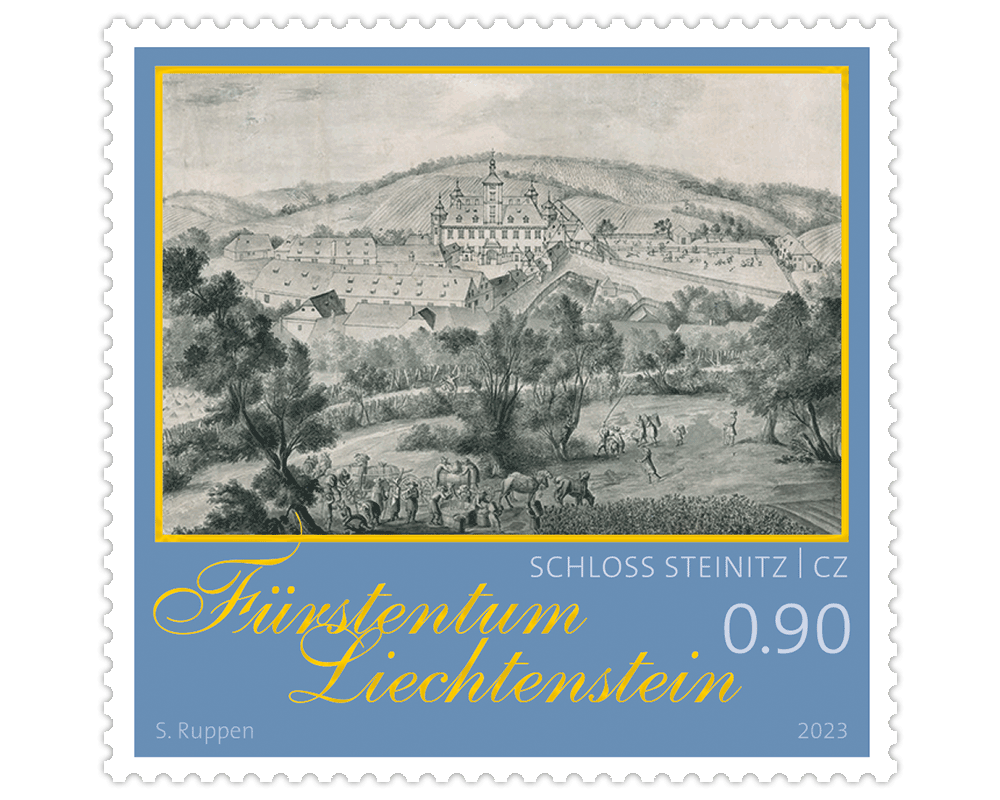
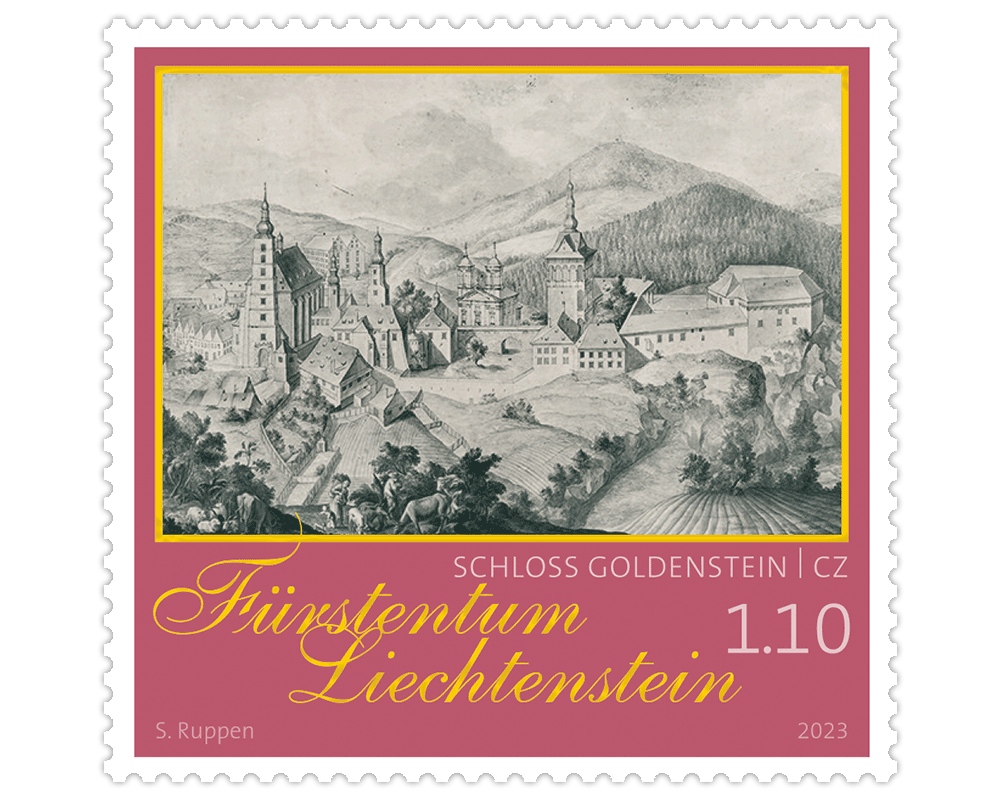
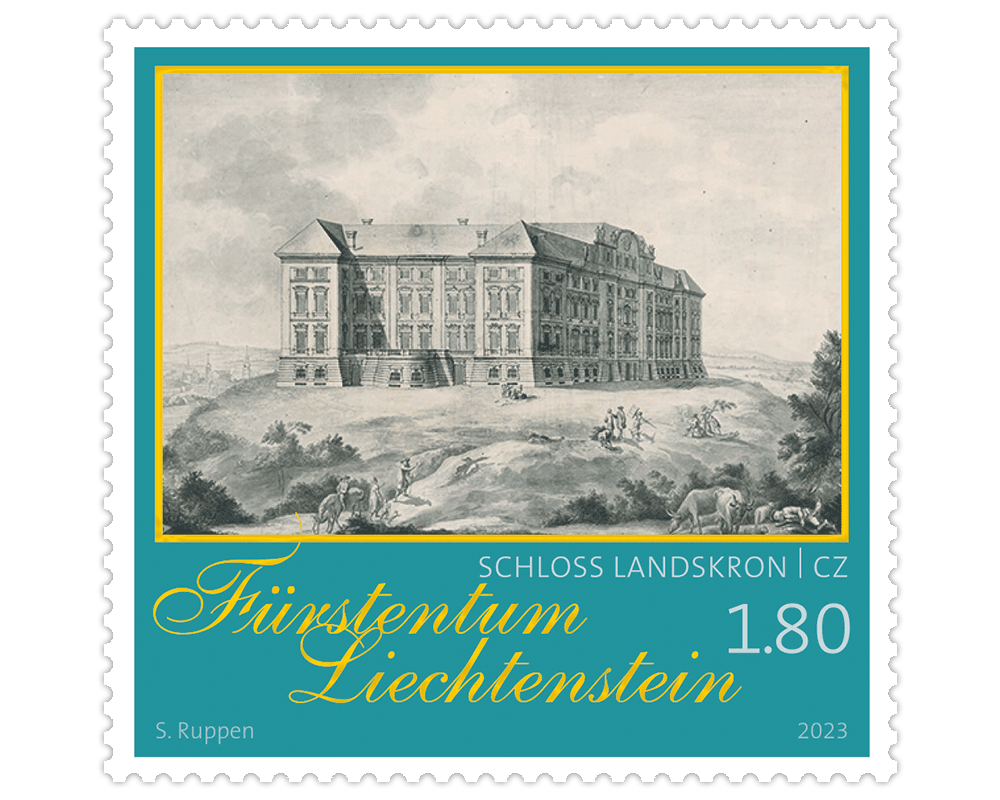
We are continuing our series on treasures from the Princely Collections with three graphic illustrations by Franconian artist Johann Adam Delsenbach (1687-1765). From 1718, Delsenbach worked as a court copper engraver for Anton Florian Prince of Liechtenstein in Vienna.
The works show three castles in the Czech Republic that were in the possession of the Liechtenstein family until the enactment of the so-called Beneš Decrees in 1945. "Steinitz Castle" (face value: CHF 0.90) in Moravia was one of the properties owned by the Princely Family after 1649.
Built in 1569 by the then ruler of Steinitz, Ulrich von Kaunitz, the Renaissance castle with an English park is used as a city museum today. "Goldenstein Castle" (face value: CHF 1.10) was also located in Moravia. The Renaissance castle came into the possession of the Liechtenstein family in 1622.
After it had already been damaged by fire once in 1770, it was destroyed by fire again in 1925. Today, there are only ruins left to see. "Landskron Castle" (face value: CHF 1.80) in Bohemia came into the possession of the Liechtenstein family in 1620 after the Battle of White Mountain, the first major military conflict in the Thirty Years' War.
Village Views
ESCHEN / NENDELN
The new special issue stamps from our Village Views series focus on the main village of Liechtenstein's Unterland region. With around 4,600 inhabitants and covering an area of ten square kilometres, Eschen-Nendeln is the largest municipality in Unterland.
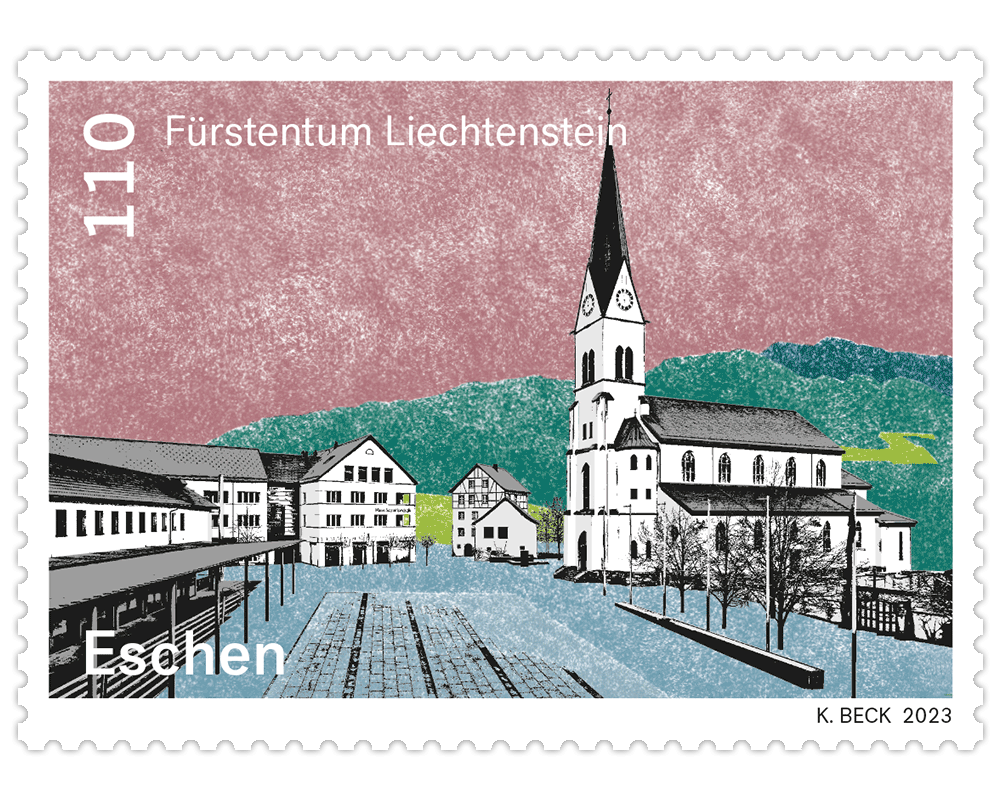
The municipal administration building, the "Haus Sozialfonds Kreuz", the listed church buildings ("Pfrundbauten") as well as St. Martin church form a harmonious complex against the backdrop of the Dreischwestern (Three Sisters) mountain on the special stamp named "Eschen" (face value: CHF 1.10).
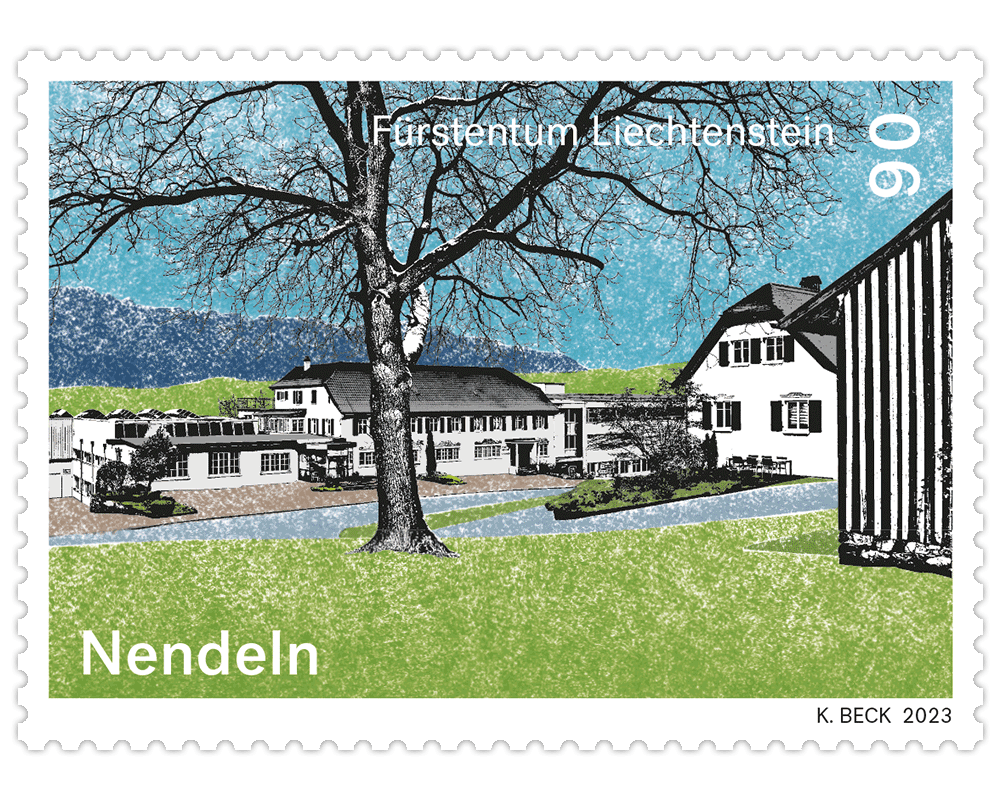
While the origins of the church buildings probably date back to the 15th century, the present neo-Gothic parish church was built in 1894 and completed in the years afterwards. The stamp "Nendeln" (face value: CHF 0.90) shows the building accommodating a traditional business, the "Schaedler Ceramics Workshop", which houses the Liechtenstein School of Art in its side extension.
On the opposite side of the street, another building contains a cultural monument steeped in history: the restored Hoffman’sche Ringofen is the only ring kiln of its kind still preserved in Liechtenstein and Switzerland and bears witness to brick production in the 18th century. The Eschnerberg mountain can be seen in the background of the group of houses depicted on the special stamp.
Stamp 4.2
BLOCKCHAIN TECHNOLOGY
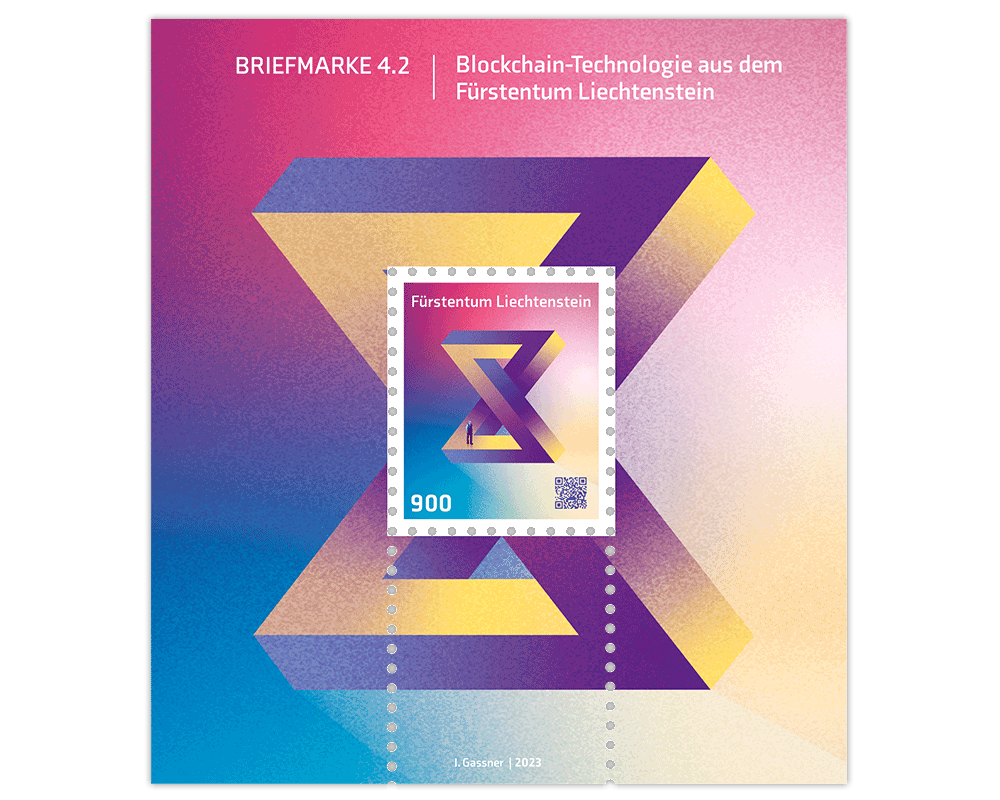
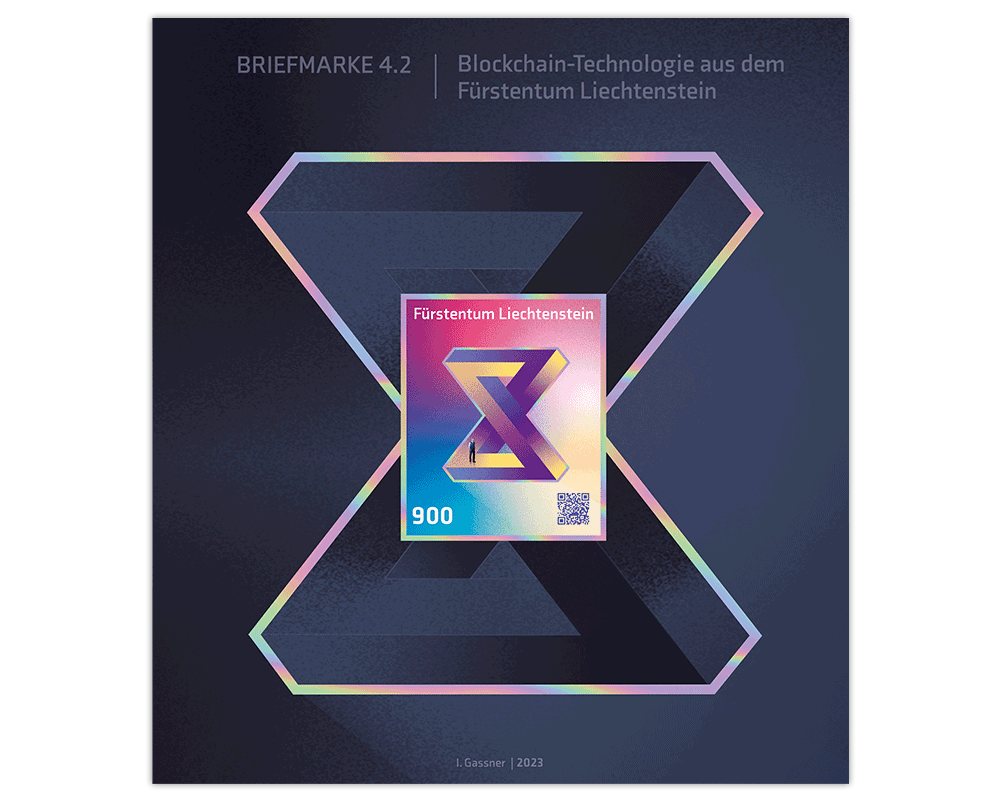
In spring 2023, Liechtenstein and Switzerland celebrated the 100th anniversary of their joint customs treaty. The "Unity" (face value: CHF 9.00) associated with this is also the theme of our latest crypto stamp. Stamp 4.2 based on blockchain technology addresses the Principality's relationship with its neighbour Switzerland.
If the special stamp is scanned using our own app (Stamp 4.1), which is now also available for iOS, interesting information, stories and games can be obtained about the relationship between the two neighbouring countries.
Among other things, owners of the new Stamp 4.2 will learn about the annual duck race on Swiss National Day, how it came about that 80 Liechtenstein soldiers went to war in 1861 and 81 men returned, or how Prince Franz Josef II managed to ensure that Liechtenstein was spared the horrors of the Second World War through diplomacy.
Besides the fun factor, our blockchain stamp series also boasts sophisticated security aspects. Owners can check whether their stamps are genuine by scanning the SQR code printed on them and transfer their property to the digital data room.
925th Birthday
Hildegard of Bingen
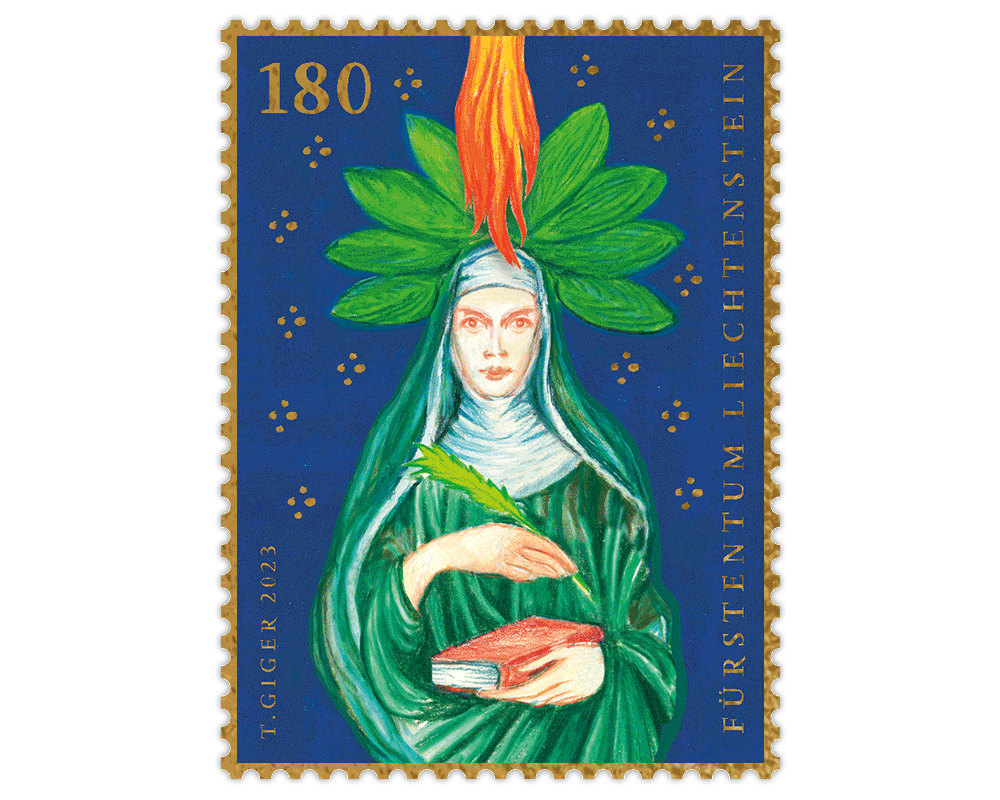
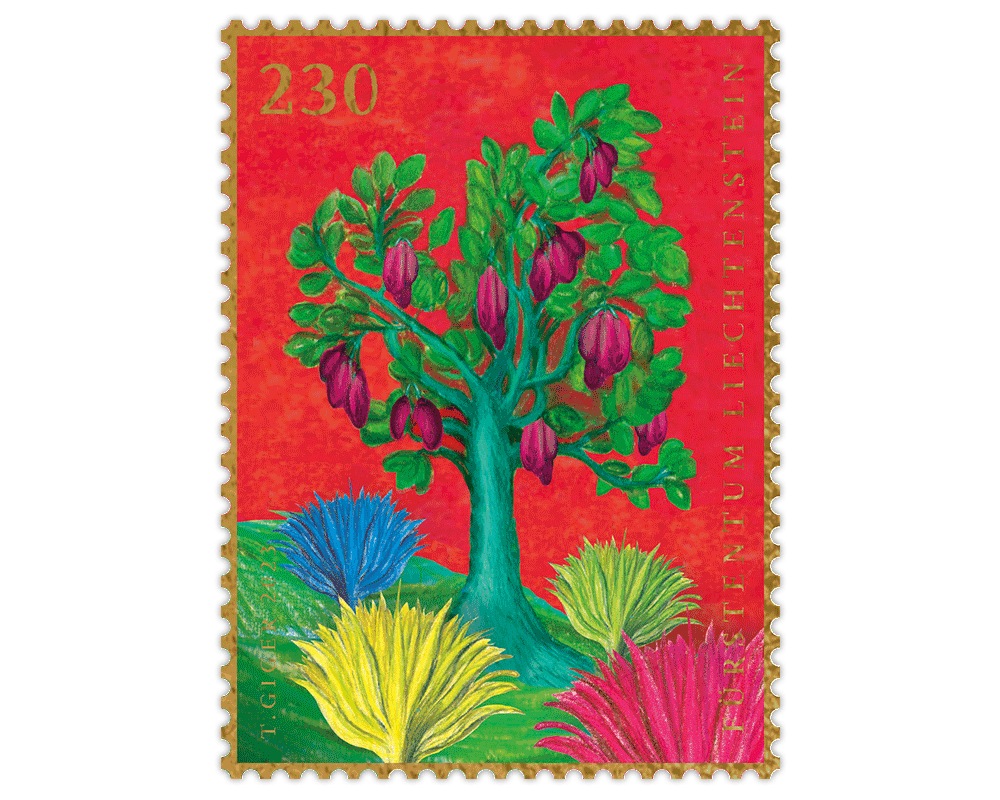
Hildegard of Bingen (1098-1179) was a German Benedictine nun, poet and composer who is best known today as an important universal scholar of nature and healing. With two special stamps commemorating her 925th birthday, we are drawing attention to her theological and medicinal work.
"The Devout" (face value: CHF 1.80) Hildegard became a guide for many people because of her faith and her way of life. She repeatedly referred to visions in her theological and philosophical works.
At the same time, her self-confident and charismatic manner helped her to achieve great fame. For example, Hildegard of Bingen was the first nun to publicly preach conversion to God to the people. As a "Naturalist and Healer" (face value: CHF 2.30), Hildegard wrote two works on nature and healing.
She combined the knowledge existing at that time about diseases and plants from the Greek and Latin traditions with that of folk medicine remedies. The idea of unity and wholeness is a key to Hildegard of Bingen's writings on nature and healing. She held the view that human beings can only remain healthy if we are mindful of the soul, the body and the senses in equal manner during our lives.
550th Birthday
Nicolaus Copernicus
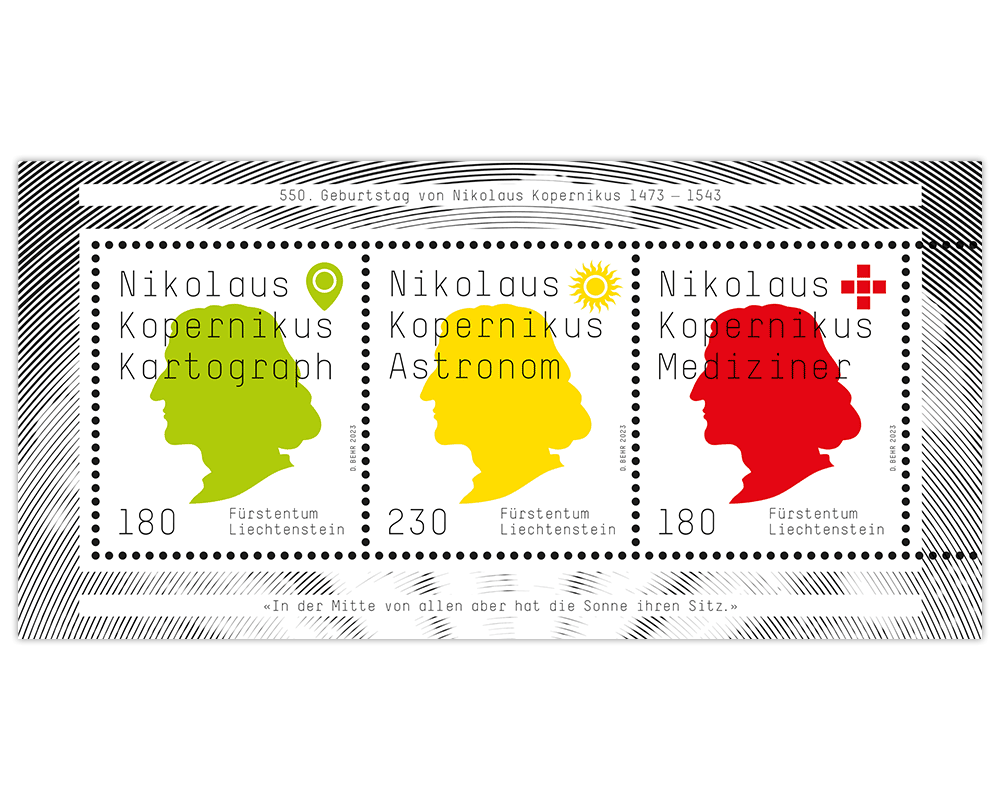
A souvenir sheet with three stamps focuses on the multifaceted life of Nicolaus Kopernicus (1473-1543): "The Cartographer" (face value: CHF 1.80), "The Physician" (face value: CHF 1.80) and "The Astronomer" (face value: CHF 2.30). Kopernicus was born 550 years ago in Thorn (Toruń), which today lies in Poland.
His discoveries still serve as the basis for many astronomical and mathematical insights. Kopernicus became best known for his development of the heliocentric view of the world, which for the first time did not see the earth but instead the sun as being at the centre of the planetary system.
Kopernicus studied ecclesiastical and secular law, but was also interested in mathematics and astronomy. After studying, he first worked as a secretary and doctor. He started producing various maps from 1526 onwards, including that of the united state "Kingdom of Poland-Grand Duchy of Lithuania" and a detailed map of Prussia.
Georg Joachim Rheticus, who came from Liechtenstein's neighbouring town of Feldkirch, was also involved in drawing up the maps. As Kopernicus' only pupil, he made a significant contribution to the dissemination of the Kopernican world system.